You can make a coconut-based whipped topping, but coconut oil and coconut cream do not act the same, and that difference matters more than you might expect. If you have ever hoped for a quick dairy-free swap that still feels light and fluffy, you are in the right place. The key is understanding which one whips, which one sets firm, and how to keep it from turning into a sad little puddle at the worst moment.
Can You Make Coconut Whipped Cream ?
Yes, you can whip coconut oil, but it won’t behave like the fluffy dessert topping you may be expecting.
You can turn solid virgin coconut oil into a smooth, body butter style blend by beating 1 cup in a chilled bowl for 5 to 7 minutes. Add a few drops of essential oil and vitamin E if you want it for skin care.
However, if you want something you can spoon over pie, use coconut milk instead.
Full-fat coconut milk or cream whips better after chilling for 24 to 48 hours, and it tastes much lighter.
Because coconut oil melts near 76°F, your whipped mix can soften quickly in a warm kitchen.
For the best texture, keep it cool and use the right base.
Coconut Oil vs. Coconut Cream
Coconut oil and coconut cream may come from the same fruit, but they perform very differently in the bowl, and that difference matters. You aren’t choosing between twins; you’re choosing between tools.
- Coconut oil is pure fat, so it can whip into a fluffy texture, but it behaves more like body butter than cream.
- Coconut cream contains both fat and water, so it can hold air and stay light.
- Coconut cream from chilled cans gives you the best chance for a smooth, stable topping.
- Coconut oil melts quickly, so it won’t stay in place on warm drinks.
If you want a dessert-like coconut topping, coconut cream is the better choice. It gives you a soft, spoonable texture without the fast melt.
What You Need for Coconut Whipped Cream
Now that you know how coconut oil and coconut cream act so differently, it helps to gather the right tools before you start. You’ll need the right base in solid form, so chill a can of full-fat coconut milk for 24 to 48 hours and scoop off the cream, or chill 1 cup of extra-virgin coconut oil if you’re making a richer whipped cream. Then grab a bowl and whisk that you have frozen for about 30 minutes. A hand mixer or stand mixer will help you get fluffy peaks with less effort. If you wish, add a little vanilla, sweetener, vitamin E oil, or a few drops of essential oil. Keep a glass jar ready too, so your finished topping stays cool and holds together nicely.
How to Make Coconut Whipped Cream With a Mixer
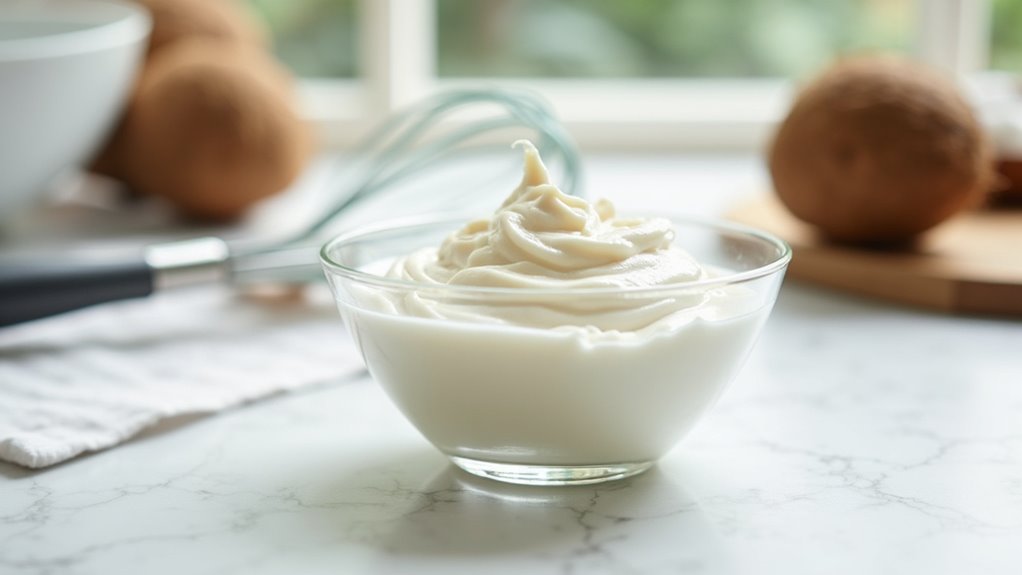
Blend the chilled coconut base until it becomes light, smooth, and fluffy. A cold bowl and a hand mixer set to high will help, then whip the solid cream for 1 to 2 minutes, until stiff peaks hold their shape. If you’re making whipped coconut oil, expect a thicker texture and whip for about 5 to 7 minutes.
- Chill full fat coconut cream for 24 to 48 hours.
- Scoop the solid part into your bowl.
- Beat until it looks airy and holds its shape.
- Add vanilla, sweetener, or a few drops of flavoring, then mix briefly.
Keep it in a sealed jar and store it cold, because warmth softens it quickly. If it melts, chill it again and rewhip.
How to Make Coconut Whipped Cream in an iSi
To make coconut whipped cream in an iSi, use a rich mix of full-fat coconut milk, a little coconut oil, and vanilla or sweetener if you like.
Blend everything well, strain it into a chilled dispenser, charge it, and let it rest in the fridge so the foam sets properly.
When you’re ready, give it a few strong shakes at first, and you’ll get a smooth, stable whipped cream that holds for days.
iSi Method Basics
Should you want coconut whipped cream that’s smooth, stable, and ready fast, the iSi cream whipper makes the whole process much easier. You can mix one can of full-fat coconut milk with 2 to 3 tbsp coconut oil, 1 tsp vanilla, and about 1 tbsp sweetener before you charge it. Whenever your coconut milk has more fat, or adds guar gum, you’ll usually need less coconut oil and get a firmer whip.
- Blend until the mix looks even.
- Pour it into the iSi whipper.
- Chill it for 3 to 4 hours, or overnight.
- Add the charger, then shake well.
That is it. You don’t need to pre-chill and separate the coconut milk initially, so you can join the creamy crowd with less fuss and more confidence.
Mixing And Chilling
Once you have your coconut mix ready, the next step is to let the iSi whipper do its quiet work.
Blend one can of full-fat coconut milk with 2 to 3 tablespoons of coconut oil, plus vanilla and sweetener, until the mixture looks smooth and rich, almost like thin whipping cream.
Then pour it into the chilled dispenser, seal it, and let it rest in the fridge for at least 3 to 4 hours.
That cold rest helps the emulsion set, so the foam comes out light instead of runny.
Use deodorized or expeller-pressed coconut oil for the best texture.
Before you dispense, shake the canister well to bring everything back together.
A little patience here helps you get a fluffy, comforting treat that feels made for you.
Serving And Storage
For the best coconut whipped cream from your iSi, keep the serving and storage routine simple and cold. You want each puff to feel light, rich, and party ready, so treat the dispenser like a cool team member, not a countertop rebel.
- Refrigerate the filled iSi for 3 to 4 hours.
- Charge it, then shake well before each use.
- Dispense it cold for the best volume and texture.
- Store the charged dispenser in the refrigerator for about one week.
If you have extra whipped cream, refrigerate it right away and use it within a few days. On warm days, chill it often because coconut fat softens above 76°F and loses firmness fast.
Why Full-Fat Coconut Milk Matters
You’ll get the best whipped cream from full-fat coconut milk because its higher fat content gives the mixture the structure it needs to hold peaks.
When you check brands, focus on the grams of fat per serving, not just the label, since richer cans whip more reliably.
If a milk looks thin or low-fat, it usually won’t give you the stable texture you want.
Full-Fat Brands Work Best
Full-fat coconut milk is the key to whipped cream that actually holds its shape because the fat traps air and turns into soft, stable peaks.
When you use coconut oil or full-fat coconut milk, choose brands that list more fat on the label, not just larger cans. That helps the cream behave the way you expect.
- Pick canned, full-fat coconut milk.
- Check grams of fat, not can size.
- Choose brands with guar gum for extra body.
- Skip light or carton versions.
If your choice seems thin, add a small spoon of solid coconut oil to help it whip better.
That can improve the texture and give you more reliable results.
Fat Content Drives Whipping
Whipping coconut milk depends on one simple thing, fat. When you choose full-fat coconut milk, you give your bowl enough rich oil to trap air and form stable, fluffy peaks. Light cartons cannot do that, so they stay thin and lack structure.
| Fat g | Result | Feel |
|---|---|---|
| 15+ | Whips well | Thick |
| 10 to 14 | Soft peaks | Loose |
| Under 10 | No whip | Watery |
Chill the can for 24 to 48 hours, then scoop out the solid cream and leave the liquid behind. If your brand is borderline, mix in 1 to 2 tablespoons of coconut oil. The extra fat improves the structure quickly. It helps the whipped cream hold its shape, taste smoother, and feel more suitable for dessert.
Best Brands for Coconut Whipped Cream
The right brand can make your coconut whipped cream light, fluffy, and easy to work with, so it’s worth checking the label before you start.
When you choose coconut milk, Thai Kitchen full-fat canned coconut milk is a solid pick because it whips well and feels reliable. You should also compare grams of fat, not serving sizes, so you can spot the richest can quickly.
- Thai Kitchen full-fat canned coconut milk
- Other canned full-fat brands with strong fat content
- Brands with added guar gum for extra hold
- Lower-fat cans only if you plan to add 2 to 3 tablespoons of coconut oil
Skip carton and light versions. If you want a stable, creamy whip that belongs at your table, start with the fullest can you can find.
Coconut Whipped Cream Flavor Ideas
Once you have chosen a rich coconut milk, you can make the whipped cream feel even more special by adding flavor that matches your dessert.
Start with vanilla, using 1 tsp per cup for a familiar, sweet finish. If you want something warmer, stir in 1/4 to 1/2 tsp almond extract for a soft nutty touch.
For chocolate lovers, mix in 1 tbsp cocoa or cacao powder per cup, using a mixer so it blends smoothly. A little maple syrup can help if you like it sweeter.
You can also try 3 to 4 drops of grapefruit oil or 1 tsp zest for a fresh lift. Then fold in cinnamon or pumpkin pie spice for cozy pies, brownies, or fruit.
For keto treats, add liquid stevia. For paleo treats, choose honey or maple syrup.
Fix Runny Coconut Whipped Cream
A runny coconut whipped cream can feel like a letdown, but it usually has a simple fix. You aren’t alone, and you can bring it back fast.
- Use full-fat canned coconut milk.
- Chill the can and bowl for 12 to 48 hours.
- If it stays loose, add 2 to 3 tbsp coconut oil.
- If it’s already runny, refrigerate it, skim the solid cream, then whip again with vanilla and a little chilled coconut oil.
Look for brands with more fat and guar gum because they hold better. A colder base whips into stiff peaks, not soup.
If the cream softens later, chill it again and briefly rewhip. With a few smart moves, you’ll get a fluffy bowl that feels right at home.
How to Store and Serve Coconut Whipped Cream
To keep your coconut whipped cream at its best, store it in a tightly covered glass jar in the fridge. It should stay firm for several days.
When you’re ready to serve it, let it sit out for about 10 to 15 minutes so it softens just enough to scoop or pipe.
If you’re taking it outside or to a party, keep it chilled in a cooler so it doesn’t turn into a coconut puddle.
Storage Tips
Coconut whipped cream stays best when you treat it like the delicate little cloud it is. Whenever you whip coconut oil or coconut whipped cream, transfer it to an airtight glass jar and chill it right away.
- Keep it in the refrigerator for 3 to 5 days.
- Add a stabilizer if you want it to last up to a week.
- Freeze extra scoops in silicone molds for 1 to 2 months.
- Thaw it in the fridge, then whip it briefly again.
If your kitchen is warm, below 76°F, keep it chilled so it won’t melt back into oil.
Avoid metal containers and use clean utensils every time.
Before serving, let it sit for 5 to 10 minutes so it softens and returns to a creamy texture.
Serving Suggestions
Keep your coconut whipped cream chilled until the very last moment because it holds its shape best when it stays cold and solid. Store it in a tightly sealed glass jar in the refrigerator, and if your kitchen runs warm, keep it chilled even more carefully.
When serving it on coffee or dessert, spoon it on just before serving since it softens quickly in your hands or on hot drinks. If it turns oily, place it in the refrigerator or freezer for 10 to 15 minutes, then whip it briefly again.
For gifting or travel, small 4 oz jars work well and reduce waste. Label each jar with coconut oil or coconut cream details, plus storage notes. Use a little, because it goes far.
Frequently Asked Questions
Can You Whip Coconut Oil Into Cream?
Yes, you can whip solid coconut oil into a light, whipped texture with a chilled bowl and mixer. Keep it cool, though, because its melting point is low, so it softens fast.
Is Coconut Oil Good for Osteoarthritis?
Not really. You may get a mild soothing effect from coconut oil massage, but coconut oil has not shown strong relief for osteoarthritis. It may help with skin comfort and make massage feel easier, yet it should not replace proven treatments.
Does Coconut Oil Help Itchy Scalp?
Yes, coconut oil can help soothe an itchy scalp. A 2023 study showed that MCTs may help relieve dryness. You can try a gentle scalp massage, but do not rely on coconut oil for a fungal infection.
Is Coconut Oil Ok for Heart Patients?
Not really. If you have heart disease, you should limit coconut oil because its saturated fat can worsen your lipid profile. Choose olive oil or canola oil instead, and check with your clinician for personalized guidance.