
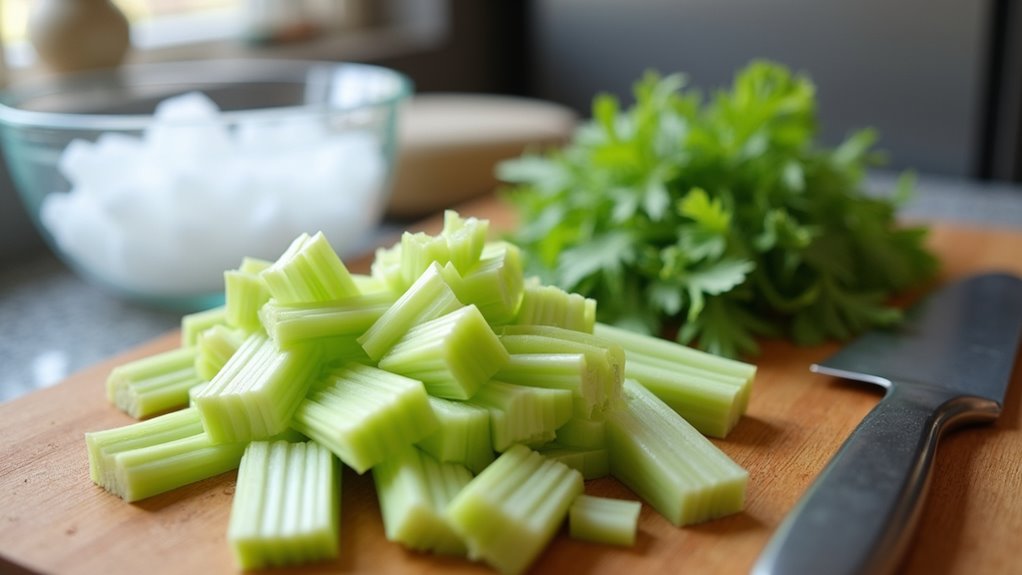
Yes, you can freeze celery, and it is a practical way to keep extra stalks from going limp before you use them. If you blanch it first, you will preserve more color and flavor, but raw freezing also works when you need speed. The key is proper preparation, because a little care now can reduce waste later. Next, you will want to know which method keeps celery useful for soups, stews, and more without turning it soggy.
Can You Freeze Celery?
Yes, you can freeze celery, and it’s a practical way to save extra stalks before they wilt in the crisper drawer.
For the best results, blanch the celery first. This helps it retain color and flavor for about 12 months, and sometimes longer if it’s packed well.
If you skip that step, you can still freeze chopped celery, but it will become limp quickly and works much better in cooked dishes than in salads or for snacking.
To keep the pieces from sticking together, flash-freeze them first, then transfer them to labeled freezer bags. That extra step makes it easier to use celery on busy nights, since you can take what you need straight from the freezer for soups, stews, sauces, stocks, and casseroles without extra effort.
Prep Celery for the Freezer
Start by washing the celery stalks thoroughly under cold running water, then trim off the root, leaves, and any soft or discolored spots.
Next, cut the celery into the size you’ll use later, and blanch the pieces for 2 to 3 minutes so they store better in the freezer.
Once they’re ready, cool them quickly in ice water and prepare them for freezing without extra fuss.
Wash and Trim
Rinse your celery well before it ever nears the freezer, because clean, dry stalks hold up much better later. Wash celery stalks under cold running water, then use a vegetable brush or your fingers to remove any dirt from the ribs and small crevices.
Next, trim off the root end and pull away the leaves, along with any discolored or stringy white parts, so you keep only the green, crisp pieces your kitchen crew will appreciate.
After that, pat the stalks dry with paper towels or a clean kitchen towel. This step matters because extra moisture turns into ice crystals and can lead to freezer burn. Taking a few extra minutes now helps improve texture and reduce waste later.
Slice and Blanch
Once your celery is clean and dry, cut it into small, even pieces so the freezer can do its job well. Trim away any tough roots, leaves, or discolored spots first, then slice the stalks into about 1/4 inch pieces or bite size dice.
This helps each piece blanch at the same pace, so you aren’t left with a mix of mushy and crisp bits.
Next, boil the pieces for 2 to 3 minutes, then move them right into an ice bath for the same amount of time.
That quick chill stops the cooking fast. After that, drain them well and pat them dry.
Spread them on a lined tray to flash freeze for 1 to 2 hours, then pack them into an airtight container or freezer bag.
Done right, you can enjoy better shelf life for about 12 months.
Should You Blanch Celery?
Yes, you should usually blanch celery before freezing it because the quick boil and ice bath help preserve color, flavor, and texture.
If you skip that step, you can still freeze raw celery, but it won’t keep as long and the quality will decline faster.
For cooked dishes like soups and stews, blanching is worth the extra step.
Raw freezing can work if you plan to use it soon.
Blanching Benefits
If you want celery that holds up better in the freezer, blanching is usually worth the extra few minutes. When blanching celery, place it in boiling water for 2 to 3 minutes, then transfer it quickly to ice water. That rapid change helps preserve flavor and color while reducing texture loss.
- It slows enzymes that dull taste.
- It reduces microbial load.
- It improves freezer quality.
- It helps celery keep for up to 12 months in the freezer.
You still won’t get back the fresh snap, but you’ll get better results for soups, stews, sauces, and stocks. If you like wasting less food and saving more, this step can feel like a small win. It can also give you more confidence when you open the freezer later.
Raw Freezing Tradeoffs
If you’re deciding whether to blanch celery before freezing it, the answer depends on how you plan to use it later.
You can freeze it raw, and that works well when you want chopped celery for soups or stews. However, raw frozen celery softens quickly, so it won’t stay crisp in salads, snacks, or ants on a log.
If you skip blanching, cut the celery into small, even pieces, flash freeze them on a baking sheet, then transfer them to airtight bags with the date. That simple step helps prevent clumping and makes it easier to grab what you need.
For the best flavor and the longest storage life, blanching is the better choice. It helps preserve color, slows quality loss, and keeps your kitchen routine simple.
Freeze Celery Step by Step
Start by preparing your celery the right way, because a little prep now saves you from soggy, sad pieces later. Wash the stalks, trim off the leaves and strings, then slice the celery into small pieces for easy cooking.
For the best color and taste, blanch it before freezing for 2 to 3 minutes, then cool it quickly in ice water. After that, drain well and pat it dry so ice crystals don’t cause the pieces to clump together.
- Spread the pieces in a single layer on a lined sheet.
- Flash-freeze them for 1 to 2 hours.
- Move them into airtight freezer bags.
- Label the bag, then use frozen celery in soups, stews, stocks, and sauces.
You will fit right in with smart cooks who like easy freezer wins.
How Long Frozen Celery Lasts
Frozen celery usually keeps its best quality for about 12 months when you blanch it first and store it in airtight freezer bags or containers.
If you freeze celery without blanching, it can still stay safe, but its quality often starts to decline after about 2 months, so the flavor and crunch fade sooner. To help it last, dry it well, freeze it in a single layer first, then seal and label it so freezer burn doesn’t set in.
Even after the best quality window passes, frozen celery can remain safe as long as it stays frozen, but its color and texture will continue to change.
How to Thaw Frozen Celery
Once you’re ready to use the frozen celery, you don’t need to make it perfect again.
To thaw it, move the sealed bag to the refrigerator overnight, about 8 to 12 hours, so it’s ready by morning. If you’re short on time, place the bag in a bowl of cold water for 30 to 60 minutes, then drain it and pat it dry. You can also skip thawing and add the frozen celery directly to cooked dishes.
- Expect the celery to feel limp and wetter than fresh.
- Use it in soups and stews, sauces, or casseroles.
- Don’t save it for salads or raw snacks.
- Avoid the microwave unless you’ll cook it right away.
That is normal, and it can still help you make a cozy meal.
Best Ways to Use Frozen Celery
Cooking with frozen celery is easy once you know where it works best, because its softer texture suits many warm dishes. You can add it directly to soups, stews, sauces, casseroles, stocks, and slow-cooked meals, where it blends in well. Skip thawing whenever possible, since adding it frozen helps reduce sogginess and keeps the cooking process moving.
If you bought frozen raw celery, use it soon, because freezer storage is best for 2 to 3 months; blanched pieces hold color and flavor for up to 12 months. You can also use it in smoothies, juices, risottos, purees, and stir-fries, where texture changes are less important.
Avoid using it in salads, crudités, garnishes, and ants on a log.
Freeze Celery With Other Ingredients
Pair celery with the right ingredients, and you can save time while keeping your meals easy to build.
Whenever you freeze celery with carrots for soups or stews, blanch each one first. Give celery 1 to 3 minutes and carrots 2 to 3 minutes, then move them to an ice bath. Dry them well, then flash freeze the pieces in a single layer before you add them to freezer bags. That step helps you avoid one giant veggie lump.
- Portioning into cups or handfuls keeps dinner simple.
- Ice cube trays work well for small mixes.
- Muffin tins help you freeze meal-size packs.
- Skip salad greens and raw cucumbers, since they’ll not stay crisp.
If you freeze celery with cooked stocks or sauces, keep it airtight and use it in hot dishes later.
Celery Fridge Storage Tips
If you want celery that stays crisp instead of limp, the fridge can do a great job when you store it properly. Trim off any discolored or stringy outer parts first, then wrap the whole celery tightly in aluminum foil and place it in the crisper drawer. This can help it stay fresh for about 2 to 4 weeks.
If you have already sliced the celery, transfer it to an airtight container or a sealed bag. It should stay good for about two weeks. Another option is to place the stalks in cold water inside a sealed container, then change the water every 2 to 3 days. Avoid the flimsy store bag, since trapped moisture can make celery go limp quickly.
Frequently Asked Questions
What Happens if You Don’t Blanch Celery Before Freezing?
If you skip blanching, you can get enzymatic browning, texture degradation, flavor loss, cell wall rupture, ice crystal formation, and nutrient leaching. The celery may turn limp, darker, and less tasty, though it can still work in cooked dishes.
Does Celery Get Mushy After Freezing?
Yes, celery does turn mushy after freezing. Ice crystals break down the cell structure, and fiber changes soften it, so you will lose its raw crunch. Blanching and flash-freezing can reduce the texture loss, but it will not stay crisp.
What to Do With a Large Amount of Celery?
Freeze it, cook it, or share it so you do not waste any. You can make celery pesto, celery kimchi, celery fritters, celery stir fry, celery juice, or celery pickles, and make the most of it.
Can Celery Help Lower Cholesterol?
Yes, celery can help a little because its fiber content supports heart health. You will get more benefit from celery juice, plant sterols, and weight management, while also supporting blood pressure and overall cholesterol goals.