About 1 in 5 home cooks stores potatoes the wrong way, and that can waste a perfectly good bag fast. You can keep raw potatoes in the fridge, but cold air changes their starch into sugar, so they may taste sweeter and brown too quickly when you cook them. If you want better results, the next question is how long they last there and when the fridge starts to work against you.
Can You Keep Raw Potatoes in the Fridge?
Yes, you can keep raw potatoes in the fridge, and for many people, it’s a smart way to extend their shelf life.
Refrigerating potatoes slows sprouting and spoilage, so they can stay usable about three times longer than in a cupboard.
However, cold storage can convert some starch into sugar, which means fries or roasted potatoes may brown faster and taste slightly sweeter or more bitter.
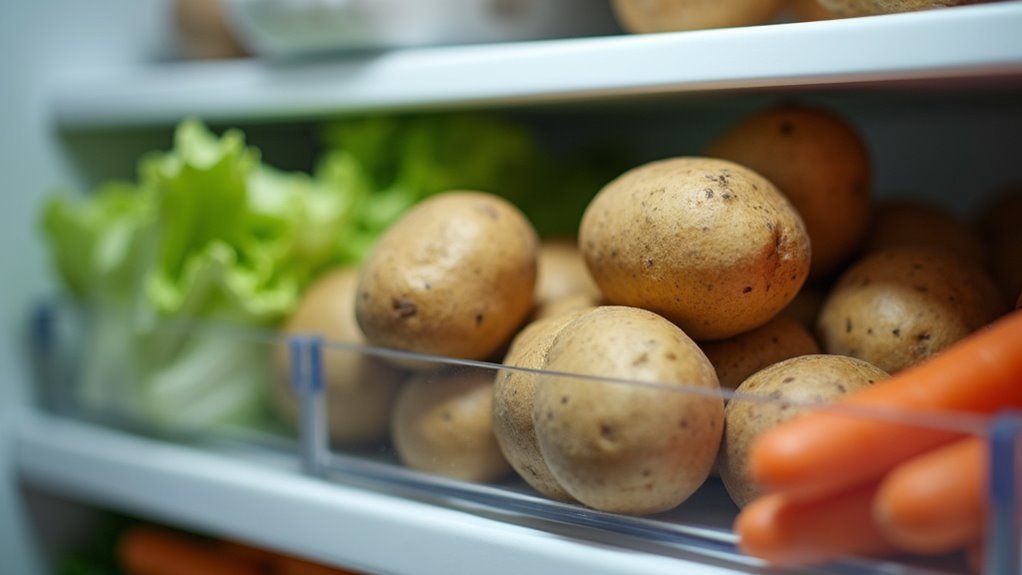
For best results, store potatoes in a dark, ventilated crisper drawer and keep them away from onions and ethylene-producing fruit.
If you plan to cook them at high heat, soak cut pieces for about 30 minutes, then dry them thoroughly.
What Fridge Temperatures Do to Potatoes
Whenever you put raw potatoes in a cold fridge, they don’t just slow down, they start turning some of their starch into sugar.
That sugar buildup can make them brown faster when you fry them, and it can also change the taste a bit, sometimes making it sweeter or slightly off.
If you want the best texture and flavor, you’re usually better off with cool storage than a very cold fridge.
Sugar Buildup In Cold
Storing potatoes in the fridge may seem like a good way to keep them fresh, but cold temperatures start a slow chemical change inside them. When refrigerated potatoes are kept below about 38°F, their starch turns to sugar more quickly. That buildup can occur in just a few weeks, and even one week in the cold can affect flavor.
- Cold speeds sugar buildup.
- Warmer storage slows it.
- Sugar rises most near fridge temperatures.
- 45 to 55°F works better.
- Short chilling is safer.
Browning During Frying
Cold storage can do more than change a potato’s texture, and you’ll notice it most at the fryer.
When raw potatoes are kept in the fridge, the cold converts more starch into sugar. That extra sugar helps the potatoes brown faster and darker, so fries can go from golden to too dark in a short time. You may also notice a bitter taste or an overbrowned crust, especially after about a week in cold storage.
To keep results more consistent, store potatoes a bit warmer, around 7 to 10°C, if possible. If your potatoes have already been in the fridge, soak cut pieces in water for 30 minutes, then dry them thoroughly before frying.
Flavor Changes In Fridge
Refrigerating raw potatoes can quietly change their flavor, and you might notice it after just a few days. When potatoes sit at typical fridge temperatures, their starch turns into sugar faster. That can make them taste a bit sweeter, then a little odd, almost bitter, after about a week.
- Cold air pushes sugar buildup.
- Fries and chips brown too fast.
- Roasting can turn oily and dark.
- Steaming keeps color, but the earthy taste fades.
- Boiling or mashing hides the change best.
If you want better flavor, keep potatoes in a cool pantry around 45 to 55°F instead. If you already chilled them, use them soon for boiling or mashing. You’ll still feel at home in the kitchen, and your potatoes won’t steal the show for the wrong reason.
What’s the Best Storage Temperature for Potatoes?
You’ll get the best results by keeping potatoes around 45 to 55°F in a dark, airy spot, since that range slows sprouting and helps them stay firm.
A cool cupboard often works better than the fridge for long-term storage, because a fridge can turn starches into sugar and change the taste. If your kitchen runs warm, move them somewhere cooler, but still allow airflow so they don’t trap moisture and spoil.
Ideal Storage Range
For the best potato storage, aim for a cool spot between 45 and 55°F, or 7 to 13°C, because that range helps slow sprouting without pushing the potatoes toward the sugary, off texture you get in the fridge.
You’ll keep them in better condition there, and your meals will taste more like home.
If potatoes are kept in the fridge, they can turn sweeter, darker, and a bit oily when cooked.
- Keep them dark
- Give them airflow
- Aim for high humidity
- Avoid cold below 38°F
- Skip warm rooms
At 68°F, they sprout and wrinkle fast, so that middle range works well for your kitchen.
Use a breathable bag or box, and don’t let moisture build up.
Fridge Vs Cupboard
Whenever you compare the fridge and the cupboard, the best choice depends on how long you need the potatoes to last and how much quality you want to preserve. If you only need to store them for a short time, a cool cupboard works well. For longer storage, the fridge can help and may keep them safe for about three times longer.
| Place | Temp | Best use |
|---|---|---|
| Cupboard | 45 to 55°F | Short-term |
| Fridge drawer | Near 50°F | Longer storage |
| Too cold fridge | Below 38°F | Risky |
| Dark, airy space | Cool, humid | Best quality |
You will get the best results if you store potatoes away from apples, bananas, and onions. Check them every week or two, and remove any soft or sprouting ones so the rest stay in good condition.
Choose the Right Potato Container
A simple container can make all the difference when you store raw potatoes, because potatoes dislike trapped moisture almost as much as they dislike being forgotten in the back of the fridge.
When you store potatoes, choose breathable options that let air move around each tuber so the potatoes stay dry and in good condition.
- Perforated plastic bags work well.
- Mesh produce bags keep air flowing.
- A wire basket helps reduce damp spots.
- Keep potatoes loosely spaced.
- Use a crisper drawer or a perforated bag in the fridge.
Avoid sealed tubs, lidded boxes, and closed bowls, since they trap humidity and can leave the bottom potatoes soft.
Keep potatoes away from apples, bananas, tomatoes, and onions so flavors stay clean and spoilage doesn’t spread as quickly.
Keep Potatoes Away From Light and Moisture
Light and moisture can turn a good potato bad faster than you’d expect, so protect both as soon as you bring them home. To store potatoes properly, choose a dark, cool spot and keep them covered or in an opaque bag. Do not wash them first, because wet skins can invite mold and soft spots. If you use the fridge, place them in the crisper drawer or in a perforated bag so they stay shaded and can breathe.
| Do | Why | Best way |
|---|---|---|
| Keep dark | Stops greening | Opaque bag |
| Keep dry | Limits mold | No washing |
| Let air move | Reduces dampness | Perforated bag |
Check them every week or two, and remove any green, sprouted, or mushy potatoes right away.
Why Refrigerated Potatoes Brown Faster
If you refrigerate raw potatoes, the cold converts more of their starch into sugar.
Then, when you fry or roast them, those extra sugars brown much faster and can even make the potatoes look too dark.
That’s why a chilled potato often cooks up sweeter, oilier, and a little more stubborn in the pan.
Sugar Conversion in Cold
Cold storage can change a potato in a subtle way because the fridge turns some of its starch into simple sugars like glucose and fructose.
You may notice this most after a week in cold air, and potatoes stored in water or on the counter can behave differently.
The cold activates enzymes that keep converting starch, and that sugar increase can make potatoes brown faster when cooked at high heat.
- More glucose and fructose build up
- Browning happens sooner
- Taste can turn sweeter or slightly bitter
- Longer chilling makes the effect stronger
- Soaking or parboiling can wash off some surface sugars
If you want a more consistent result, keep potatoes from sitting too cold for too long.
Faster Browning When Fried
That same cold storage that turns potato starch into sugar can also affect how your fries or chips brown in the pan. When potatoes are refrigerated, extra glucose and fructose build up near the surface and react with asparagine during frying. This speeds up Maillard browning, so potatoes can darken faster at 350 to 375°F.
After a week in the fridge, they may cook unevenly, taste slightly sweeter or more bitter, and produce more acrylamide in hot oil. That doesn’t mean you’re doing anything wrong. If you want better results, soak cut potatoes in cold water for 30 minutes, then dry them thoroughly before frying. This simple step helps you control browning and achieve a more even, golden finish.
How Long Raw Potatoes Last in the Fridge
Raw potatoes can stay fresh in the fridge much longer than they do on the counter, especially if you keep them whole, dry, and in a dark spot in the crisper drawer. You can usually count on them for weeks, and often for months, when you chill them below 5°C.
In cool storage, russets might last 3 to 5 months, Yukon Golds 2 to 3 months, and red or fingerling potatoes could last 1 to 2 months. For peeled potatoes, the clock moves fast, so treat them with care.
- Keep whole potatoes in a ventilated container.
- Check them every 1 to 2 weeks.
- Remove soft potatoes right away.
- Toss sprouting, moldy, or green ones.
- Use peeled potatoes within 24 hours.
Cold can make them sweeter, so fry with care and avoid waste.
Keep Potatoes Away From Onions
Even though your potatoes may look fine, storing them near onions can shorten their shelf life quickly. Onions release gases that can cause potatoes to sprout, shrivel, and develop mold or an off taste sooner. You have worked hard to stock your kitchen, so keep them stored separately.
Place potatoes in a potato sack or in a cool, dark, well-ventilated spot, or in the fridge drawer if that’s your plan. Keep onions in a dry, airy place, away from the potatoes. Also store apples, bananas, and tomatoes separately, since they can speed spoilage.
Check your potatoes every 1 to 2 weeks, and remove any that are soft, sprouting, moldy, or taste off right away. This simple habit helps the rest stay fresh longer.
Prep Potatoes Before You Chill Them
Before you tuck potatoes into the fridge, give them a little prep so they stay fresh instead of fussy. Start by brushing off dirt, then give them only a light rinse if needed. Dry each potato fully because moisture invites mold. Leave the skins on to help lock in nutrients and slow moisture loss. If you spot sprouts or green patches, trim those away before storing your potatoes.
- Use a breathable bag or mesh drawer
- Keep the fridge near 5°C or below
- Check tubers every 1 to 2 weeks
- Remove soft, sprouted, or green ones
- Chill peeled or cut pieces in cold water with lemon juice or vinegar
If you’re cutting potatoes for later, keep the pieces even so they cook together nicely.
When to Skip the Fridge for Potatoes
You can skip the fridge if you only need potatoes for a few days and want to keep their flavor mellow and their frying quality intact. If you plan to fry or air-fry them soon, keep them out of cold storage, because chilling can turn starch into sugar and make fries brown faster, taste a bit bitter, and absorb more oil.
You should also skip the fridge for red, fingerling, and Yukon Gold potatoes when you have a cool, dark, airy pantry instead. That setup helps them stay firm and in good condition.
For russets and other potatoes, use room-temperature storage only if the spot stays around 45 to 55°F. If sprouting worries you, buy less often or freeze par-cooked potatoes.
Frequently Asked Questions
Are Potatoes Ok on a Diabetic Diet?
Yes, you can include potatoes, but portion control is important because they can have a strong effect on blood sugar. They fit best when you choose boiled, cooled, or waxy potatoes and pair them with protein, fiber, or healthy fats.
Can Potatoes Help With Hyperpigmentation?
Potatoes may offer mild skin brightening, but you should not expect much. You might notice small, inconsistent fading of hyperpigmentation with raw slices or juice, but proven treatments work better. Patch test first, and see a dermatologist when needed.
Are Potatoes Good for a Cardiac Diet?
Yes, potatoes can fit a cardiac diet. They are heart healthy when you bake, boil, or steam them. You can boost their potassium and fiber, and a little goes a long way when you skip butter and salt.
Does Raw Potato Help With Acid Reflux?
No, raw potato usually does not help acid reflux. It may feel briefly soothing, but that is not proven and it can still upset your stomach. Choose cooked, peeled potatoes instead, and speak with a clinician if symptoms persist.