
Dry aging calls for stable temperature, steady humidity, and enough interior space to handle your cuts without crowding them. The wrong cabinet makes the process awkward fast, especially in a home kitchen where storage, noise, and footprint all matter.
You are looking at a mixed group here, from compact home units to larger meat aging cabinets for heavier use. The right match depends on how much meat you plan to age, where the unit will live, and whether you want built-in flexibility or a simpler freestanding setup.
The Lineup, Simplified
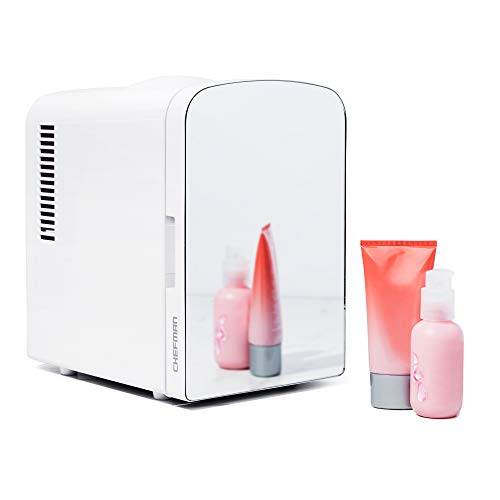
Chefman Iceman Portable Mirrored Personal Fridge 4L
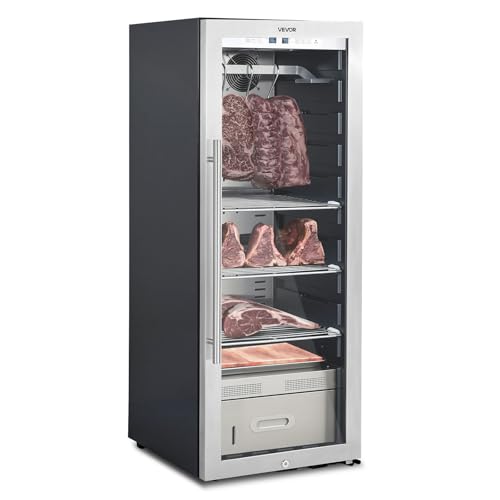
VEVOR 232 LBS Dry Aging Fridge for Steaks

VEVOR 99 LBS Dry Aging Fridge for Steaks
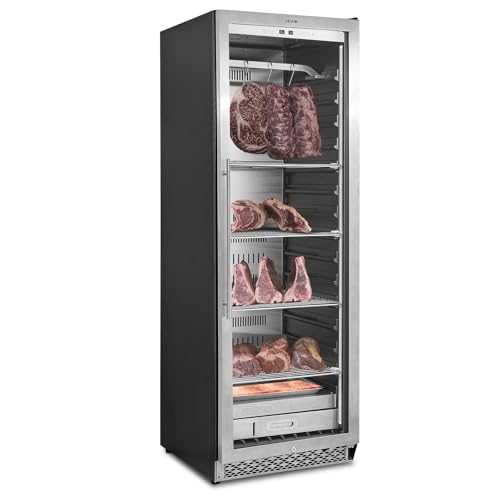
VEVOR 298 LBS Dry Aging Fridge for Steaks
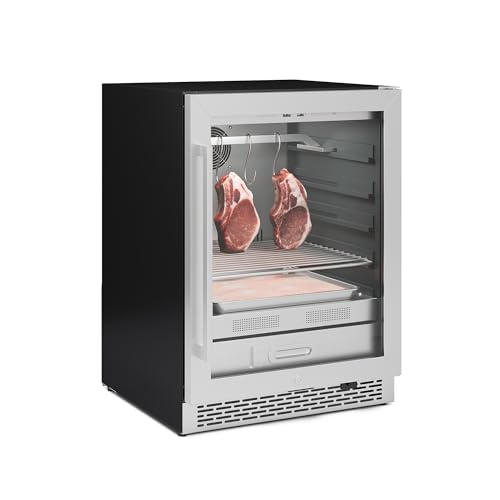
Jocisland 110L Dry Age Fridge with Precise Temp

Cobalance Dry Aging Fridge for Steaks up to 33 lbs
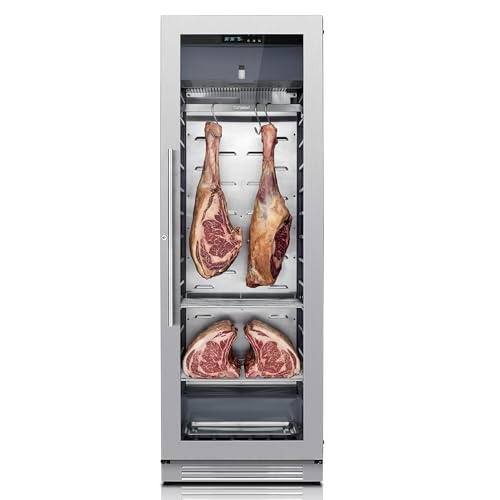
Ca’Lefort 298 LBS Dry Ager 12.46 Cu.Ft

Ca’Lefort 209 LBS Dry Ager 3.78 Cu.Ft
A Closer Look At Each Pick
For a desk, dorm shelf, or travel setup, this 4L unit is about convenience first. The mirrored door gives it a polished look, while the cool and heat modes make it more flexible than a plain mini fridge, even though its tiny interior keeps it in a narrow lane.
Compared with the heavier dry aging cabinets later in this list, this Chefman is for storing small personal items, not meat aging. You may find the compact size perfect for skincare or makeup, but the trade-off is obvious: there is very little room, so organization has to stay tight.
A Favorable Mix
- 4L footprint fits tight spaces with ease.
- Cool and heat modes add useful range.
- Mirrored front suits vanity or desktop use.
Things To Consider
- Very limited capacity keeps it specialized.
- Not suited to meat aging or bulk storage.
Who It Suits Best
Desk users, dorm setups, and travelers who want a small personal cooler with heating support.
Where A Sibling Pick Shines
VEVOR 99 LBS Dry Aging Fridge for Steaks suits anyone who needs real meat-aging capacity instead of personal-item storage.
This VEVOR leans into serious storage, with removable hooks, shelves, and trays helping you sort different cuts without stacking everything on top of itself. The adjustable temperature range from 34°F to 77°F and humidity range from 60% to 85% give you room to tune the cabinet for long dry-aging runs.
That scale makes sense for a busy kitchen, a small restaurant, or a home setup that handles larger batches. The catch is size and commitment, since a cabinet like this asks for real floor space and a deliberate cleaning routine once you start loading it heavily.
Everyday Advantages
- 232 lb capacity supports larger aging batches.
- Hooks, shelves, and trays help separate cuts cleanly.
- Broad temp and humidity ranges support flexible aging.
- Best suited to frequent use, not occasional experiments.
Small Caveats
- Large cabinet size needs dedicated room.
- Cleaning and loading take more effort than on compact units.
- Himalayan salt is not included, so you need to source that separately.
Who Should Grab It
Home cooks with large cuts to age and commercial settings that want a full-size meat cabinet.
Another Choice May Suit
Ca’Lefort 298 LBS Dry Ager fits you better if you want a similarly serious cabinet with a more premium-feeling feature set.
Compared with the 232 lb VEVOR above, this version trims the scale while keeping the same dry-aging focus. The 99 lb capacity makes more sense for a serious home setup, or for a small operation that does not need the bigger cabinet footprint.
The freestanding and under-counter flexibility is the practical part here, because it gives you a better shot at fitting the unit into an existing layout. The trade-off is simple enough: you gain placement options, but you give up the headroom of the larger VEVOR models.
Everyday Wins
- 99 lb capacity suits moderate aging needs.
- Works freestanding or under counter.
- Precision temp and humidity control support consistency.
- Removable hooks, shelves, and trays make sorting easier.
Worth Noting
- Smaller capacity limits larger batch planning.
- Himalayan salt is not included.
Feature Snapshot
Best Suited To
You fit this model well if you want dry-aging capability without stepping into the larger commercial cabinets.
Look Elsewhere When
VEVOR 232 LBS Dry Aging Fridge for Steaks makes more sense for higher-volume aging and wider cabinet space.
This is the VEVOR to study when you want a larger, more installation-friendly cabinet. It can work freestanding or built in, and that flexibility matters in a restaurant line or a remodeled home kitchen where fixed placement changes the whole plan.
Its 298 lb capacity gives you real breathing room for bigger cuts and a fuller rotation, which is a clear step up from the 99 lb model. The honest read is that the size only pays off when you age meat regularly, because a cabinet this substantial is overkill for occasional use.
Why It Works Well
- 298 lb capacity supports heavier aging schedules.
- Built-in or freestanding setup adds placement flexibility.
- Digital monitoring keeps cabinet readings easy to check.
- Adjustable shelves help organize different cuts.
Potential Compromises
- Large format needs committed floor or wall space.
- Better suited to regular use than occasional projects.
Built With In Mind
You fit this pick best if you run a home meat program with enough volume to justify a large cabinet.
A Better Fit Elsewhere
VEVOR 99 LBS Dry Aging Fridge for Steaks suits smaller kitchens and lighter batch plans more comfortably.
Jocisland stands out because it splits the difference between fixed installation and flexible placement. The reversible door and secure lock help it fit a tighter kitchen plan, while the 110L cabinet size still gives you room for serious home aging.
It sits closer to the mid-size VEVOR options than the compact Cobalance units, but the lock and door flexibility make it easier to work into a shared kitchen or an enclosed prep area. You may find that useful if access and layout matter as much as capacity.
Positive Takeaways
- 110L capacity supports modest but real aging plans.
- Reversible door helps with layout constraints.
- Secure lock adds controlled access in shared spaces.
- Built-in and freestanding options broaden placement choices.
Areas To Watch
- Smaller than the larger VEVOR and Ca’Lefort cabinets.
- Best suited to planned batches rather than very large loads.
Feature Overview
Made For
Home cooks who want a mid-size aging cabinet with easier placement and door flexibility.
Skip It When
Ca’Lefort 298 LBS Dry Ager fits you better if your goal is a much larger aging chamber.
Cobalance keeps the footprint focused, which helps in a home kitchen where a dedicated aging cabinet still has to share space with everything else. The adjustable temperature range from 34°F to 72°F and humidity range from 50% to 85% give you enough control to explore different aging styles without moving into a massive cabinet.
The 33 lb capacity is the key limiter, but it also makes the unit feel approachable for a first aging setup. A food loss reimbursement note appears in the coverage language, yet the real practical story is simpler: this is a compact chamber for controlled small batches, not a heavy production machine.
Real Benefits
- Small 33 lb capacity keeps the cabinet approachable.
- Wide temp and humidity ranges offer useful control.
- Works well for ribeye, ham, salami, and similar small batches.
- Compact form suits kitchens with limited room.
Less-Strong Areas
- Capacity is modest compared with the larger cabinets here.
- Best for focused batches, not broad inventory.
- Himalayan salt is not included.
The Right Fit
You suit this pick best if you want to learn dry aging with a smaller, more manageable home unit.
Where Another Pick Suits Better
Jocisland 110L Dry Age Fridge with Precise Temp works better for you if a mid-size chamber matters more than compactness.
Ca’Lefort leans into cabinet quality with a variable-frequency inverter compressor, and that matters because steadier temperature control tends to be the difference between an easy routine and a fussy one. The built-in humidity regulation from 60% to 85% keeps the setup self-contained, so you do not need an external water hookup.
Compared with the VEVOR 298 lb cabinet, this one reads as more refined and a touch quieter on paper, especially for open-plan kitchens. The trade-off is that premium control hardware usually comes with more to learn up front, so this suits you best when you want a long-term station rather than a casual appliance.
A Few Strong Suits
- 12.46 cu. ft. cabinet gives generous room.
- Inverter compressor supports steadier temperature management.
- Built-in humidity control avoids external hookup needs.
- Low-noise operation suits shared kitchen spaces.
Worth Bearing In Mind
- More cabinet than a casual kitchen needs.
- Premium feature set asks for a learning curve.
Technical Highlights
Perfect Match For
You fit this model best if you want a large, well-controlled aging cabinet for a dedicated home or restaurant setup.
Reach For A Different Pick When
VEVOR 298 LBS Dry Aging Fridge for Steaks is the simpler call when you want a comparable size with a more straightforward feature set.
This Ca’Lefort compresses serious dry-aging capability into a smaller cabinet, which is exactly what many home kitchens need. The variable-speed inverter compressor and built-in humidity regulation make the appliance feel more controlled than a plain compact fridge, even before you account for the lower noise profile.
It sits in an interesting middle ground between the smaller Cobalance and the larger Ca’Lefort 12.46 cu. ft. cabinet. You may find it easier to place than the bigger unit, while still getting a dedicated aging chamber rather than a multipurpose compromise.
Advantages To Know
- 3.78 cu. ft. footprint helps in tighter kitchens.
- Inverter compressor supports stable cabinet behavior.
- Built-in humidity control avoids external water hookup.
- Low-noise design is easier to live with day to day.
Minor Gripes
- Smaller chamber limits how much you can age at once.
- Better for targeted home use than high-volume service.
Product Snapshot
Whose Shelf It Belongs On
You suit this pick best if you want a smaller dry-aging cabinet for home use without giving up control features.
Swap It Out When
Ca’Lefort 298 LBS Dry Ager fits you better if you need a much larger cabinet with more total storage room.
What Matters Most Before Choosing Dry Aging Fridges
Capacity And Placement
Cabinet size decides how often you can age and where the unit can live. Smaller models suit apartments and compact kitchens, while large cabinets make more sense in dedicated prep areas, garages, or restaurant spaces.
Control Range And Stability
Temperature and humidity ranges matter because dry aging depends on consistency, not guesswork. A unit with tighter control and steadier operation usually feels easier to manage over long cycles.
Installation And Daily Handling
Freestanding, built-in, and under-counter options change how the fridge fits your layout. Door swing, shelf style, and cleaning access matter just as much as raw capacity once the cabinet is in regular use.
Key Details That Separate These Cabinets
Common Shopping Slip Ups
A common miss is buying too much capacity for a small kitchen or too little for real aging plans. Another is overlooking setup details, then discovering the cabinet blocks traffic or needs more room than expected.
The Upgrade Payoff
Higher-tier models usually cost more because they bring steadier control, larger chambers, better layout flexibility, and quieter operation. That upgrade makes the most sense when you age meat regularly and want the cabinet to feel like part of the kitchen, not a temporary workaround.
Frequently Asked Questions
How much capacity do you need for home dry aging?
A smaller chamber suits occasional projects and limited kitchen space. Larger cabinets make sense once you start aging whole cuts more regularly.
Do you need both temperature and humidity control?
Yes, both matter because dry aging depends on a controlled cabinet environment. Temperature keeps the process steady, while humidity helps shape the aging conditions.
Is a built-in model better than a freestanding one?
Built-in models work well in planned kitchen layouts. Freestanding cabinets are easier to place and usually simpler to reposition later.
Are compact dry-aging cabinets still useful?
Yes, compact cabinets can be a smart match for smaller households. The trade-off is batch size, so you need to plan around less interior room.
What matters most for first-time use?
Start with size, control range, and installation style. Those three choices affect daily use more than any decorative detail.
Closing Thoughts
The right dry-aging fridge depends less on brand names and more on the space you have and the amount of meat you plan to handle. For smaller kitchens, the compact Ca’Lefort and Cobalance units make sense, while the bigger VEVOR and Ca’Lefort cabinets suit heavier use. Choose the size that matches your routine, and the cabinet will feel useful rather than oversized.