
Commercial salad drying gear earns its keep in places where prep runs all day. You want fast water removal, simple cleaning, and a build that fits the volume you handle without turning the prep counter into a bottleneck. Some of these picks are true salad spinners, others are larger food-processing tools that serve the same drying job in commercial settings.
A Fast Comparison Of The Options

Septree Commercial Food Dehydrator 18 Trays

E-Greetshopping Electric Salad Spinner Large 6L
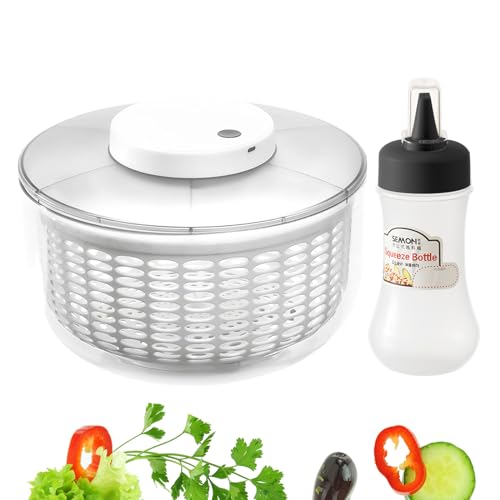
Goldmeet Electric Salad Spinner 6L

Cercker Commercial-Dehydrator Machine 22 Trays

Dynamic E002 Manual Salad Spinner 5 Gallons

Netcoin Electric Potato Peeler 2-in-1

pollock Commercial Hand Dryer Wall Mounted

Zyliss Swift Dry Salad Spinner Stainless Steel Large 6L
Meet The Standout Selections
For prep rooms that run through a lot of produce, this 18-tray machine gives you a very different scale than the hand-spun options below. The stainless-steel build suits heavy rotation, while the large drying area points to batch work rather than casual countertop duty.
The trade-off is plain: this is bigger equipment, so you’re paying for capacity and footprint instead of a small, tidy footprint. Commercial kitchens, caterers, and households preserving large harvests will get the most out of it, especially when you want one unit to handle fruit, herbs, and jerky-style work.
Everyday Wins
- 18 trays let you spread out a large amount of food without crowding the racks.
- Stainless-steel construction suits damp, busy prep spaces better than lighter plastic housings.
- The included fruit roll trays and hanging gear add flexibility for different foods.
- Large-capacity drying fits meal prep, bulk preservation, and small food-service jobs.
Worth Noting
- It takes real counter or floor space, so tighter kitchens will feel the size quickly.
- Cleanup is more involved than with a simple salad spinner because there are more racks and accessories.
- The scale makes it better for regular batch use than occasional lettuce drying.
Technical Highlights
Who It Suits Best
You benefit most from this if you run a commercial prep space or preserve food in large batches at home.
Where A Sibling Pick Shines
Zyliss Swift Dry Salad Spinner Stainless Steel Large 6L is a better fit for you if you mainly dry greens and want a compact counter tool.
Compared with the big dehydrator above, this is the fast-grab choice for salad prep on a tighter schedule. A 6L bowl gives you useful volume for greens, and the rechargeable format cuts out hand-cranking, which matters in a lunch rush or a home kitchen with tired wrists.
The honest read is that it’s built for convenience more than heavy-duty throughput. You’ll like it most for lettuce, herbs, and washed vegetables that need a quick spin before dressing or storage.
The Helpful Details
- USB rechargeability avoids the drag of manual spinning.
- 6L capacity suits family salads and moderate prep runs.
- One-button operation keeps the learning curve low for busy kitchens.
Small Caveats
- The plastic-body style means it feels more lightweight than stainless-steel options.
- Its job is focused on greens, so it won’t replace a larger processor-style unit.
Who Will Love This
You should look here if you want a simple electric spinner for daily salad prep in a home or café setting.
Another Choice May Suit
Dynamic E002 Manual Salad Spinner 5 Gallons suits you better if your prep line needs bigger lettuce batches and you want to avoid charging altogether.
Where the E-Greetshopping model leans on rechargeability, this Goldmeet unit adds a squeeze bottle and a washer-dryer workflow. That matters in kitchens where you rinse greens first, then want a compact tool to move straight into drying without changing stations.
The clear shell is a practical touch, because you can watch the process instead of guessing. It’s a sensible fit for you if salad prep is frequent but not industrial, and the smaller parts are easy to keep in rotation.
Practical Advantages
- 6L capacity gives you enough room for everyday greens prep.
- The included 350ml squeeze bottle supports a wash-and-dry routine.
- Transparent housing makes the drying stage easier to monitor.
- Food-grade ABS and PP point to an easy-wipe, kitchen-friendly build.
Points To Keep In Mind
- The all-in-one design is still aimed at salads, not broader food-service chores.
- Recharge timing may matter in a busy service window, so plan charging ahead.
Feature Snapshot
Best Suited To
You’re a strong match for this model if you want a compact salad tool that also helps with rinsing steps.
Swap It Out When
E-Greetshopping Electric Salad Spinner Large 6L makes more sense if you want rechargeable operation and a simpler one-button setup.
After the 18-tray Septree, this Cercker unit pushes capacity even further and adds a twin-plug setup. That makes it a serious fit for kitchens that need more flexibility in power arrangement and more tray space for large batches.
The catch is that this is not casual countertop gear, and the caution about plug use deserves respect in real kitchens. For large-volume drying, though, the scale and 110V or 220V adaptability give it a strong case.
Practical Pluses
- 22 trays give you a broader working area than the 18-tray model above.
- The twin-plug arrangement adds installation flexibility in different spaces.
- 2500W output suggests a serious setup for recurring batch work.
- Stainless-steel construction suits a hard-working prep environment.
Things To Weigh
- The unit is large, so you need room and a stable place to set it.
- Power configuration matters, and the plug guidance needs careful handling.
- Cleanup will take more time than with smaller spinning tools.
Who Should Grab It
You’re in the right lane here if you run food preservation, dehydration, or other high-volume prep work.
Look Elsewhere When
Septree Commercial Food Dehydrator 18 Trays is easier to place if you want strong capacity without stepping up to the larger Cercker footprint.
Compared with the electric spinners, this one keeps things simple with a manual gear-driven design. That makes sense in kitchens where you want a dependable, no-charging workflow and enough bowl size to manage a real pile of washed lettuce.
The 5-gallon capacity is the story here, because it moves you well past small household spinners. It fits prep counters that serve salads by the pan, not just by the bowl, and the strong gear system is the kind of detail that matters over repeated use.
A Favorable Mix
- 5-gallon capacity handles a substantial amount of lettuce at once.
- Manual operation avoids batteries, cords, and charging cycles.
- Gear-driven construction suits frequent commercial use.
- It works well for rinsed greens that need quick drying before dressing.
Details To Watch
- Manual cranking still asks for some effort, especially during long prep runs.
- Its size takes more storage space than a compact salad spinner.
- The design is focused on lettuce drying rather than broader kitchen tasks.
Quick Technical Notes
Built With In Mind
You’re the best match for this if you run a prep line that values volume, simplicity, and direct control.
A Better Fit Elsewhere
E-Greetshopping Electric Salad Spinner Large 6L suits you more if you want push-button drying instead of manual cranking.
This one sits outside the pure salad-spinner lane, but it earns a place because it combines peeling with vegetable drying. In a restaurant prep area, that sort of two-step support can reduce back-and-forth between tools, especially for potato-heavy menus.
The 85W motor and 2.2 lb capacity point to a compact workhorse rather than a giant floor unit. That balance suits you if you want one machine for smaller batches, though it won’t replace the bigger dehydrators above.
Useful Highlights
- Two-in-one function covers peeling and vegetable drying in a single unit.
- 2.2 lb capacity fits modest batch work without overwhelming the counter.
- Stainless-steel parts and mixed polymers support a durable feel.
- One-button operation keeps daily handling straightforward.
Less-Strong Areas
- The smaller capacity means it suits routine prep more than large-volume kitchens.
- As a mixed-use tool, it is more specialized than a dedicated salad spinner.
The Right Fit
You should consider this if potatoes and washed vegetables share the same prep station in a home or restaurant kitchen.
Skip It When
Dynamic E002 Manual Salad Spinner 5 Gallons is the cleaner match if your main job is drying large heads of lettuce.
For wash stations that need drying support beyond salad prep, this wall-mounted unit plays a different role from the spinners above. The stainless-steel housing and adjustable airflow direction make sense in shared bathrooms, back-of-house sinks, or any place where wall space is already part of the plan.
One thing worth considering is that the sound level and temperature range matter more here than with the countertop picks. That makes it more of an installed utility than a food-prep tool, but for the right space it brings a neat, fixed solution.
Real-World Strengths
- Wall-mounted design keeps counters and sinks less crowded.
- Stainless-steel construction fits damp, high-traffic spaces well.
- Controllable airflow direction adds flexibility in shared wash areas.
- Sensitive sensor activation supports quick, hands-off use.
Potential Sticking Points
- Installation takes planning, so it’s not as simple as setting a bowl on a counter.
- The listed noise level may feel noticeable in quiet spaces.
- It serves a different job than the salad spinners, so it won’t replace them in prep work.
Whose Shelf It Belongs On
You’re the right match if you need a mounted drying unit for a commercial wash area or shared facility.
A Different Pick
Zyliss Swift Dry Salad Spinner Stainless Steel Large 6L is a better fit for salad stations that need bowl-based drying instead of wall installation.
After the larger commercial units, this feels like the most polished salad-specific option in the group. The 6L stainless-steel bowl, non-slip base, and serving-bowl format all point to a tool that can move from prep to table without looking out of place.
The one-handed pump and brake system make it easy to control the spin, which is useful in a busy kitchen where you’re often working with one hand already occupied. AquaVent technology is built for airflow during drying, so the result is a cleaner, more controlled salad workflow than a basic manual spinner.
Features That Help
- 6L capacity gives you practical room for greens and herbs.
- Serving-bowl design reduces the number of dishes you need at prep time.
- Brake control gives you quick stopping power.
- Stainless steel adds a sturdier feel than plain plastic bowls.
- Non-slip base helps keep the spinner steady on the counter.
Trade Offs
- The polished bowl style is best for salads, not for larger food-service drying chores.
- It still occupies more space than a small manual countertop spinner.
Perfect Match For
You’re likely to appreciate this most if you want a refined salad spinner for daily prep and serving.
Reach For A Different Pick When
Dynamic E002 Manual Salad Spinner 5 Gallons fits you better if your priority is bulk lettuce drying instead of a more presentation-ready bowl.
What To Look For Before You Choose Commercial Salad Dryers
Capacity And Workflow
A 6L spinner suits salad prep for a home kitchen, café, or small prep line, while 18-tray and 22-tray dehydrators belong in heavier batch work. The real question is whether you dry a bowl of greens or manage trays of produce for storage, service, or preservation.
Power, Manual Effort, And Placement
Electric models save arm work, but they need charging or a power source. Manual spinners remove that concern and still make sense for high-volume greens, though they ask for more effort and storage room.
Materials And Cleanup
Stainless steel usually feels better in damp, hard-used spaces, while ABS and PP plastics keep some compact salad tools lighter and easier to move. More parts and more trays generally mean more cleaning, so the simplest shape often wins for daily rinse-and-repeat use.
Small Details That Change The Experience
Common Shopping Slip Ups
Shoppers often focus on capacity alone and overlook footprint, cleanup, and power setup. A large dehydrator can be a bad fit in a cramped prep area, while a small spinner may feel underbuilt for repeated commercial use.
The Upgrade Payoff
Higher-tier units usually add tray count, stronger housings, better control, or more flexible power options. That extra spend makes sense when you run the tool every day and need fewer bottlenecks during prep.
Frequently Asked Questions
Are commercial salad dryers the same as food dehydrators?
Not really. Salad dryers usually mean spinners that remove water from greens, while dehydrators use trays and airflow for larger drying jobs.
Is a manual spinner still useful in a professional kitchen?
Yes, especially in prep spaces that want simple equipment with no charging routine. Manual models also avoid the pause that comes with waiting for a battery to top up.
How much capacity do you need?
For salad prep, 6L works well for modest batches. For larger service, 5-gallon or tray-based models make more sense.
Are stainless-steel salad tools worth it?
They usually feel better in busy kitchens and tend to suit damp work areas. The trade-off is weight and, sometimes, a larger footprint.
Which option fits a small kitchen best?
A 6L spinner is the cleaner fit for tight counters. The larger dehydrators and wall-mounted dryer ask for more space and planning.
Final Thoughts
You get the best results by matching the tool to the job, not by chasing the biggest number on the box. For quick salad prep, the Zyliss and the two 6L electric spinners are the most practical starting points. For higher-volume work, the Septree, Cercker, and Dynamic units move you into a much different class.