
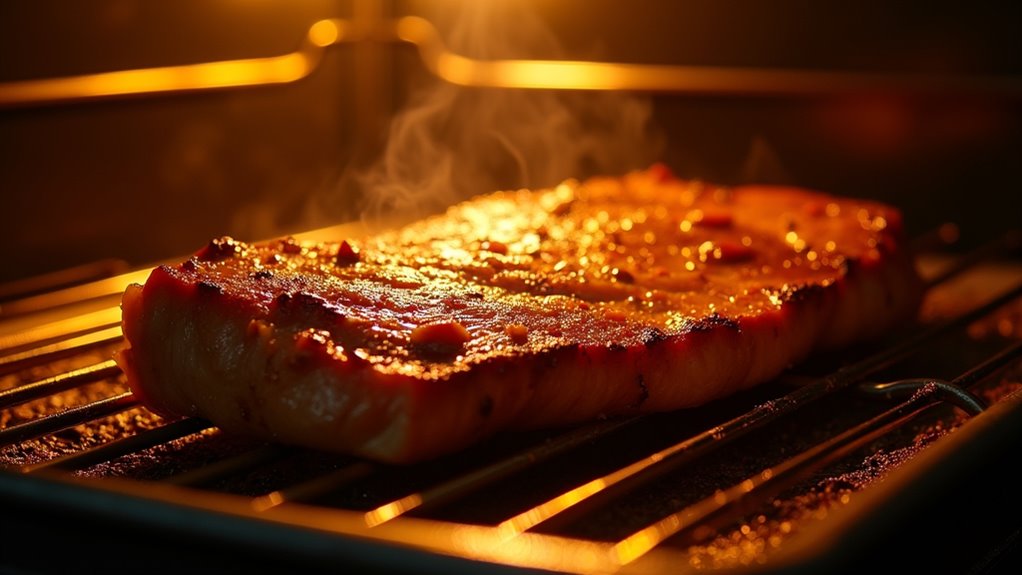
Yes, you can broil in most ovens, and it is one of the fastest ways to give food a crisp, browned top without turning your kitchen into a sauna. The broiler uses intense heat from above, so it works very differently from baking and can surprise you if you treat it the same. Before you try it, you will want to know where your broiler is, which pan can handle the heat, and how to keep dinner from going from golden to smoky in a blink.
What Is a Broiler in an Oven?
A broiler is the oven’s high heat helper, and it works much like an upside-down grill. You use the broiler when you want fast browning from direct heat at the top of the oven.
Most broilers sit near the top of the oven, and they usually run at high heat, around 500°F to 550°F. Because it cooks so quickly, you should preheat it for about 5 minutes. Then set your food on metal cookware, such as a broiler pan or cast iron, so it can handle the heat safely.
Keep the food close, usually 3 to 5 inches below the element, and stay nearby. That quick check-in helps you get good color without stress.
Is Broiling the Same as Baking?
No, broiling isn’t the same as baking, even though both happen in your oven. When you broil, the broiler sends intense heat from the top element at high temperatures, which browns food quickly on the surface. You usually place the pan a few inches below it and watch closely because broiling happens fast.
Baking works differently. It uses gentler, even heat to cook food through more slowly, usually on the middle rack. That’s why baking feels calmer and broiling feels more like a quick sprint.
You also use different cookware. For broiling, choose metal or cast iron. For baking, glass, deeper pans, or parchment lined sheets fit better.
Do All Ovens Have a Broiler?
You may expect every oven to broil, but that isn’t always true.
The broiler can also be in different places, such as the top of the main oven or a pull-out drawer below.
If your oven doesn’t have a true broiler, or only has a weak broil setting, check the manual for safe alternatives and the correct rack position.
Once you know what your oven actually offers, you can avoid guesswork and get much better results.
Broiler Location Variations
Most modern ovens do have a broiler, but its location can vary from one model to the next. You may find a top heating element inside the main cavity, or a broiler drawer below the oven.
If your oven uses the top element, move the oven rack to the highest position so your food sits about 3 to 5 inches away. That close spacing helps you get strong browning without burning the edges.
If you have a broiler drawer, place the food on the sliding pan instead. Either way, check your owner’s manual for the correct setup, because controls and rack rules vary.
You should also confirm the broil or high-heat setting, since every model handles it a little differently.
Ovens Without Broilers
Although many ovens have a broiler, not all of them do, and that can be frustrating when you’re ready to brown the top of a dish quickly.
In ovens without broilers, you can still get close by using the highest bake temperature, usually 450 to 500°F, and moving your food to the top rack near the heat.
If your range seems different, check the appliance manual first, because some models hide a broiler drawer or a separate broil mode.
A toaster oven broil setting can also provide more speed in a small space.
If your oven truly lacks that option, a stovetop grill pan can help you finish foods with a crisp top.
With a few smart moves, you’re still in the game.
Alternative Broiling Options
Around the kitchen, it’s easy to assume every oven can broil, but that isn’t always true. If your oven doesn’t have a broiler setting, you can still get close.
Set the oven to its highest temperature, or use convection at 450 to 500°F, then move food to the top rack near the heat. That gives you more browning, even though it’s less intense than real broiling.
You can also use a portable grill for steaks or a cast iron pan on high heat for crisp edges and good sear marks.
If your oven feels unclear, check the owner’s manual so you know the broiler location, settings, and safety notes. That quick check reduces stress and helps you cook with confidence.
How to Find Your Oven Broiler
Start by locating the broiler, the part of your oven that provides quick, intense heat. Open the door and look for a heating element at the top of the oven or a broiler drawer beneath the oven. Then find the broiler control, often marked Broil with High and Low settings.
| Clue | What you see | What it means |
|---|---|---|
| Top element | Heating coil overhead | Broiler in main cavity |
| Drawer | Pull-out space below | Separate broiler drawer |
| Label | “Broil” on dial | You have a broiler |
| Heat | Noisy warm-up | Preheat is starting |
| Rack | Top position | Ready for a broiler pan |
Move the oven rack high in the cavity, or use the drawer pan and your model guide. That is how you find your broiler quickly.
What Pan or Rack Should You Use?
Choose the right pan, and broiling gets a lot easier.
You’ll do best with a broiler pan, since its slotted top and drip pan below let fat run off and keep food out of juices.
If you don’t have one, use a rimmed sheet pan with a wire rack set inside it. That setup works like a metal sheet pan version of the real thing and gives your food room for hot air.
For extra crust on small pieces, a preheated cast iron skillet can help.
Skip glass, ceramic, parchment, silicone, and nonstick pans under the heat.
Line the drip pan or rimmed sheet pan with aluminum foil for easier cleanup, but don’t block the slots.
Your oven racks can handle this, and you can too.
How to Set the Rack for Broiling
Set your rack so the food sits close to the broiler element, usually about 3 to 5 inches below it for most cuts. For thin pieces, move it a little closer.
For thicker food, give it more space so the outside doesn’t scorch before the inside cooks through. Then center your pan or skillet on the rack. This helps heat move evenly and keeps the browning under control.
Rack Height Basics
The right rack height can make broiling feel much less tricky, because that small gap controls how fast your food browns and how easily it burns. You’ll usually want the top rack close to the broiler element, but not touching it. For most 3/4 to 1 inch cuts, aim for a 3 to 5 inch gap so you get a nice crust without a charred surprise.
For thin cuts like fish fillets, shrimp, or thin steaks, use the top rack and keep the rack position about 2 to 3 inches from the element for fast searing. For thicker cuts, move the rack down one level or choose broil low so the center cooks through. Your oven manual can confirm the exact setup, and that little check helps you feel right at home.
Distance From Element
Near the broiler, distance matters more than you might think, because even a small shift in rack height can change everything from gentle browning to fast burning. Aim for a 3 to 5 inch gap between the food and the broiler element so you can control the heat.
For thin cuts like shrimp, thin steaks, or bread, move the rack closer for quick browning. For thicker cuts such as bone-in chicken or a steak over 1 inch thick, lower the rack so the inside cooks through.
- Preheat the broiler first.
- If the food browns too fast, lower the rack one or two slots.
- Always watch closely, since ovens vary.
Once you learn the right rack position, you’ll feel more confident and cook with ease.
Which Broiler Setting Should You Use?
Choosing the right broiler setting helps you cook with more control and less stress.
For most quick jobs, start with the broil setting your oven offers. High Broil works best for thin cuts of meat, fast searing, and bold browning. Low Broil gives you more time while the inside catches up with the top. If your oven has only On/Off, check the manual so you know the heat level.
Before you cook, preheat the broiler for 3 to 5 minutes. Then set the rack position so the food sits about 3 to 5 inches from the element. Keep an eye on it and monitor constantly. If the surface darkens too fast, use Low Broil, lower the rack, or switch to Bake.
How Long Should You Broil Food?
How long you broil food depends on what you’re cooking, how thick it is, and how close it sits to the heat. When you broil on high, preheat the oven for 3 to 5 minutes, then use a broiler pan so the heat reaches the food evenly.
For thin cuts like fish, shrimp, or cutlets, plan on 2 to 6 minutes per side. For steaks that are 3/4 to 1 inch thick, you’ll often need 8 to 18 minutes total, with one flip. Vegetables and fruit usually need 5 to 12 minutes.
- Watch the food closely.
- Check doneness with a thermometer.
- Pull proteins a few degrees early, then let them rest.
How to Broil Meat Without Burning It
Start by giving your meat a quick prep before it meets the heat. Pat it dry, then trim excess fat so the broiler won’t spark messy flare-ups. Brush on a thin coat of oil, just enough to help browning, not dripping.
Next, preheat your broiler for about 5 minutes. If you’re cooking thin cuts, use High and position the oven rack so the meat sits 3 to 5 inches from the element. For thicker pieces, use the high/low function or a lower setting and move the rack 5 to 8 inches down.
Then watch it closely. Flip once if needed, and check with an instant-read thermometer. Pull it a few degrees early, then rest it for 5 to 10 minutes. If the surface starts to char, move it lower right away.
How to Broil Vegetables and Fruit
Vegetables and fruit need a lighter touch than meat, but the broiler can still turn them golden and sweet if you set them up well. You’ll get better results when you cut vegetables into 1 to 2 inch pieces or long spears, then toss them with a thin coat of high smoke point oil and salt. Preheat the broiler, then place everything in a single layer on a foil lined broil pan, with the rack about 3 to 5 inches from the heat.
- Leave space so air can move.
- Turn pieces halfway through.
- Watch for quick caramelization.
For fruit such as peaches or pineapple, add a little sugar if you prefer, and broil close enough to soften and brown quickly. Keep an eye on every batch so the food stays tender, not scorched.
What Foods Should You Avoid Broiling?
You should avoid broiling foods that are very wet or heavily sauced because the sugars and oil can burn quickly and make a mess.
You should also skip thick cuts such as whole roasts, whole chickens, and large bone-in pieces since the outside can char before the inside cooks through.
If in doubt, choose thinner, drier foods that can sit close to the heat without scorching.
Wet Or Oily Foods
Broiling works best when food has a dry, even surface, so wet or oily items can become difficult quickly. If you want the broil setting to work well, avoid wet marinades, thick batters, and foods with excess surface oil. These can steam, splatter, and trigger flare-ups under high direct heat.
Use broiler-safe cookware and place a drip pan below the rack to catch fat before it reaches the element.
- Avoid oily glazes that can char in seconds.
- Trim loose fat from cuts before broiling.
- Skip tiny, wet slices that collapse too fast.
You should also avoid glass pans, parchment, and very soggy produce. With a little preparation, you can keep the process controlled and work more safely.
Thick Cuts Near Element
Once the surface is dry, the next thing to watch is thickness, because a broiler’s intense top heat can punish thick cuts fast. When you broil close to the element, cuts over 1 to 1.5 inches can look done on the outside long before the center is safe. By then, the exterior may overbrown and the meal can turn frustrating.
| Avoid | Better |
|---|---|
| Whole roasts | Bake or roast |
| Bone-in thick pork chops | Cook gently first |
| Heavy patties | Finish with care |
If you are tempted anyway, keep the food 4 to 6 inches from the element, use the broiler’s low setting, and finish cooking gently. Thick cuts with lots of fat can flare, and bone-in pieces can stay undercooked near the bone. You deserve a meal that feels easy, not risky.
How to Prevent Smoke and Flare-Ups
Smoke and flare-ups can turn a simple broil into a messy, stressful kitchen moment, but a few smart steps keep things under control. Use a broiler pan or slotted pan so fat drops away, and trim excess fat before food goes in. Pat meat or fish dry, then line the drip pan with aluminum foil, not the rack, for easy cleanup.
- Preheat the broiler for 3 to 5 minutes, then keep the oven vent or hood on.
- Watch the food closely and stay near the oven.
- Avoid sugary glazes and heavy oil near the element.
If smoke starts to build, slide the rack down or switch to Bake. With these habits, you stay calm, protect your food, and feel like you have dinner under control.
How to Tell When Broiled Food Is Done
A quick check at the right moment can save your meal, and it also saves you from the painful question of whether it’s burned or perfect.
Watch closely, because broiling can change fast. Use an instant read thermometer to confirm internal temperature: beef steaks often finish at 125 to 135°F for medium rare, pork at 145°F, and chicken at 165°F. Pull food a few degrees early for carryover.
For fish, look for opaque, flaky flesh that lifts easily with a fork. On thin cuts, touch helps too: soft means rare, springy means medium, and firm means well done.
You can also trust surface cues such as a deep golden brown crust or bubbling glaze. When cheese or casseroles brown, take them out quickly before they turn bitter.
How to Rest Food After Broiling
Let your broiled food rest before you dig in, because that short pause makes a big difference in texture and flavor. Resting helps food stay juicy, tender, and ready to serve.
Move the meat or fish to a warm plate or cutting board, then loosely tent it with foil so it holds heat without turning soggy. For small portions, place them on a wire rack set over a sheet pan.
- Shrimp and thin fillets need 2 to 3 minutes.
- Steaks and pork chops need 5 to 10 minutes.
- Larger roasts need 10 to 20 minutes for carryover cooking and juice redistribution.
Use a meat thermometer to confirm the center reached the target doneness, often about 5 degrees F under. Then let it rest, slice steaks and chops across the grain, and serve.
Frequently Asked Questions
How Do You Broil in a Regular Oven?
Broil by using your oven’s top element. It reaches about 500 to 550°F, which creates quick caramelization. Use high heat, place the rack near the top, preheat the broiler, choose broiler-safe cookware, and watch the food closely.
Can I Use My Oven as a Broiler?
Yes, you can use your oven as a broiler for oven searing. Check rack positioning, broil safety, and temperature control, then monitor energy use. Keep up with broiler maintenance, and your indirect broiling will stay reliable.
How to Broil if You Don’t Have a Broiler?
Use your oven’s hottest top rack like a sunbeam on steel. Try pan searing, torch finishing, or a salamander alternative. You will get stovetop broiling, cast iron roasting, broil-like grilling, and fast oven-roasted crisping.
Do You Crack the Oven When Broiling?
Yes, you can crack the oven door while broiling, depending on your model. Check safety tips, use the right rack position, watch visual cues, and manage heat control. A closed door helps retain moisture and shortens preheating time.