
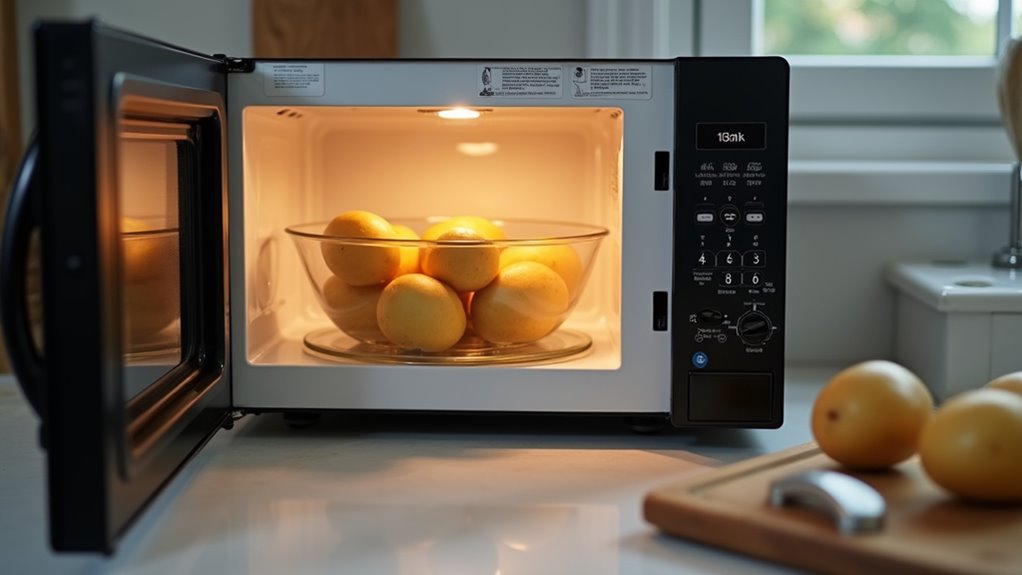
About 1 in 4 home cooks say potatoes are the hardest side dish to time right, but you can make mash faster with your microwave. If you cut the potatoes evenly, add a little water, and cover them loosely, they will cook into tender pieces without much fuss. The real trick comes next, because the way you mash them can make them silky or heavy, and that choice matters more than you may think.
Can You Make Mashed Potatoes in the Microwave?
Yes, you can absolutely make mashed potatoes in the microwave, and it’s a real time-saver when you want comfort food without extra hassle. Microwave mashed potatoes can still turn out cozy and homemade.
Start with russet potatoes for a fluffy result, then cut them evenly so they cook at the same pace. Once they’re tender, mash them with a hand masher to keep the texture light and smooth. Stir in warm milk and butter a little at a time until the potatoes become rich and creamy.
If you prefer a denser texture, Yukon Gold potatoes are a good choice instead. With a few simple steps, you can make a warm bowl that works well on busy nights and still delivers the comfort you want.
How to Microwave Potatoes for Mashing
Start by peeling the potatoes if you want to, then cut them into even 3/4 to 1-inch chunks so they cook at the same pace.
Put them in a large microwave-safe bowl with about 1/4 cup water, cover it loosely, and microwave on high until they’re fork-tender, usually in 9 to 12 minutes.
After that, drain them well, mash them gently, and work in warm milk, butter, salt, and pepper until they taste just right.
Potato Prep Steps
Peel the potatoes if you want a smoother mash, then cut them into even 3/4 to 1 inch chunks so they cook at the same pace in the microwave. Cutting them into chunks helps the potatoes stay tender all the way through, which makes mashed potatoes easier to finish later.
Move the pieces into a large microwave safe bowl and add 2 to 4 tablespoons of water. If you want a little extra steam, use up to 1/4 cup.
Then cover the bowl loosely with a microwave safe plate or vented plastic wrap. This setup keeps moisture in and helps the potatoes soften without drying out.
Once they’re ready, you’ll have a warm base that’s set up nicely for mashing.
Microwave Cooking Times
Once your potato chunks are in the bowl, the microwave does most of the heavy lifting for you, and that part is marvelously low stress.
When you cut potatoes into 1 inch chunks, they cook evenly and stay ready for mashing. Add about 1/4 cup water, cover the bowl, and microwave on high for 9 to 12 minutes, depending on your wattage and the potato type. Check at 8 minutes, then stir or rotate so every piece gets equal heat. If they aren’t fork tender yet, continue in 2 to 3 minute bursts.
Sliced potatoes need more watchfulness, so check them often.
After cooking, uncover carefully, drain any extra water, and mash them right away while hot with warmed milk and butter for the smoothest texture.
Mashing And Seasoning
Now the real work begins, because hot potatoes mash best while they’re still steamy and tender. Use a potato masher or ricer, then add the warmed milk and butter a little at a time. This helps the mashed potatoes stay smooth instead of gummy.
As you mash, season with kosher salt and freshly ground black pepper, then taste again. If you want more richness, fold in chives, roasted garlic, sour cream, or cheddar. Keep the microwave-warmed liquid nearby so you can loosen the texture quickly if the potatoes seem stiff.
Work gently, and you’ll end up with a creamy bowl that fits your table. If there are leftovers, reheat them covered with a splash more milk and butter for easy recovery.
Best Potatoes for Microwave Mashed Potatoes
Russet potatoes and Yukon Golds are the two best choices for microwave mashed potatoes, and each one gives you a different kind of comfort in the bowl.
If you want light, fluffy mash, choose Russet potatoes because their high starch breaks down quickly in the microwave.
If you prefer creamy mashed potatoes with a richer feel, Yukon Gold offers a buttery taste and a denser bite that needs less dairy.
Pick potatoes of similar size, then cut them into even potato chunks so they cook together evenly.
If you like to leave the skins on, thin-skinned Yukon Gold works well and keeps the texture pleasant.
Avoid waxy potatoes, since they can turn gluey during mashing.
How Long to Microwave Potato Pieces
Cut potato pieces into about 1-inch cubes, then place them in a large microwave-safe bowl with about 1/4 cup of water so they steam instead of dry out. This method is reliable because cut potatoes usually need 9 to 12 minutes on high to become fork-tender. Stir once halfway through so the pieces cook evenly and no one gets a crunchy bite. If you use thinner slices, start checking them at 6 to 9 minutes.
| Piece size | Time | Check |
|---|---|---|
| 1-inch cubes | 9 to 12 min | Fork-tender |
| 3/4-inch pieces | 6 to 9 min | Sooner |
| As necessary | 1 to 2 min more | Test again |
Microwave power matters too. Stronger units finish sooner, while smaller ones may need the full time. Let the bowl sit covered for 1 to 2 minutes before you drain it.
How to Mash Potatoes With Milk and Butter
Stir the hot, drained potatoes with warm milk and melted butter, and they’ll become smooth and rich in just a few minutes.
Warm about 3/4 cup milk with 4 to 6 tablespoons butter in the microwave for 30 to 90 seconds, just until the butter melts and the liquid feels hot.
Then add the milk and butter mixture a little at a time as you mash, starting with about half. A potato ricer or hand masher keeps the potatoes fluffy, while gentle mixing protects the creaminess.
Season with kosher salt and black pepper as you go.
If you want more flavor, fold in a little sour cream, cheese, or chives.
If the mixture thickens later, stir in a splash of warm milk.
How to Make Microwave Mashed Potatoes Creamier
Warm the milk and butter together before adding them to the potatoes, so they go in at a comfortable temperature and blend more smoothly.
Use a little more butter than you think you need, because the extra fat gives the mash a softer, richer texture.
If you want an even silkier finish, stir in a splash of cream at the end and taste for salt so the flavor stays balanced.
Warm Dairy First
A simple step that often makes microwave mashed potatoes much creamier is to heat the dairy before you add it. Warm dairy keeps your potatoes hot, so the starch can soak up liquid evenly instead of seizing up.
Put 3/4 cup milk or half-and-half with 4 to 6 tablespoons butter in a microwave-safe cup, then microwave it for 30 to 90 seconds until the butter melts. If you like garlic, warm a minced clove in the mixture for a softer, fuller flavor.
Then add the warm mixture a few tablespoons at a time, mashing between additions. That slow pace helps you get smooth potatoes without turning them gluey.
If you use cream or half-and-half, heat it a little less so the mash stays light and inviting.
Use More Butter
For extra creamy microwave mashed potatoes, don’t hold back on the butter. Use 4 to 6 tablespoons of unsalted butter for 2 1/2 pounds of potatoes, and start with 4 so you can taste as you go. Cut it into 1/2-inch pieces, then drop a few into the hot potatoes so they melt right into the starch.
Next, warm the butter with 3/4 cup milk in a microwave-safe bowl for 30 to 60 seconds, until hot and smooth, then mix it in for a fluffy, rich finish. If you want more body, swap in a little cream or stir in cream cheese after mashing. That small change makes your mash feel velvety and welcoming, like the kind everyone wants a scoop of.
Finish With Cream
Provided you want your microwave mashed potatoes to feel rich and silky, finish them with cream while they are still hot. Warm your milk or half-and-half with butter first, then fold it in slowly. This warm dairy helps the potatoes absorb fat quickly, so you get more creaminess and less cooling. If you want a fuller taste, use half-and-half or heavy cream instead of milk. You can also stir in a spoonful of sour cream, crème fraîche, or Greek yogurt for a velvety lift. Keep mixing gentle, or use a ricer before adding dairy, so the mash stays fluffy, not gluey.
| Add | Why it works |
|---|---|
| Warm milk + butter | Melts in smoothly |
| Half-and-half | Enhances richness |
| Sour cream | Adds tang |
| Olive oil | Dairy-free creaminess |
How to Fix Runny or Gluey Mashed Potatoes
If your mashed potatoes turn runny or gluey, don’t panic, because both problems can usually be fixed with a little patience and the right heat.
If microwaving left you with runny mashed potatoes, gently simmer the mash on low and stir so extra moisture escapes. You can also fold in a few spoonfuls of dry mashed potatoes or riced potatoes.
If you notice a gluey, gummy texture, stop mixing right away, since overworking, especially with Russets, releases too much starch. Use a hand masher or ricer next time, not beaters.
For a slightly thin batch, whisk in warm butter or milk, or better yet, cream, one spoonful at a time. If the potatoes were undercooked, finish heating them fully.
Flavor Variations for Microwave Mashed Potatoes
Once your microwave mashed potatoes are hot and fluffy, you can make them more exciting with a few simple flavor changes. For extra richness, replace some of the milk with half-and-half or heavy cream, then warm it with butter before stirring it in.
If you like garlic, whisk minced garlic or garlic powder into the warm mixture so the flavor softens and becomes mellow instead of sharp.
Next, melt in sharp cheddar or Parmesan for a cozy, cheesy bowl that feels comforting and familiar.
For a tangy lift, fold in sour cream, crème fraîche, or Greek yogurt, then taste and adjust the salt.
Finally, add chives, parsley, or green onions at the end so the potatoes stay bright, fresh, and inviting.
How to Store and Reheat Microwave Mashed Potatoes
To keep your microwave mashed potatoes tasting fresh, store them as soon as they cool down, but don’t leave them out longer than two hours.
When you refrigerate mashed potatoes, use an airtight container so they stay creamy and safe for 3 to 4 days.
If you want to save extra portions, you can freeze them for 3 to 6 months in freezer-safe bags or containers with a little headspace.
- To reheat refrigerated mashed potatoes, cover them and warm them at medium power.
- Stir every 1 to 2 minutes, and add a splash of milk or cream for smoothness.
- For frozen mash, thaw it overnight first, then reheat gently.
If your mash turns dry or grainy, whisk it well or blend it briefly while adding warm milk or butter. That will help bring it back nicely.
Frequently Asked Questions
Can Diabetics Eat Mashed Potatoes?
Yes, you can eat mashed potatoes. You will want portion control, carb counting, and awareness of glycemic impact. Monitor blood sugar and coordinate insulin timing with your meal.
Is It Better to Microwave or Boil Potatoes for Mashed Potatoes?
For most mashed potatoes, boiling gives better flavor development and a fluffier texture, but microwaving wins on cooking time, nutrient retention, and kitchen convenience. You can use either method; just warm the milk and mash gently.
Can I Eat Mashed Potatoes on a Renal Diet?
Yes, you can eat mashed potatoes on a renal diet, provided you practice portion control, choose low sodium recipes, use potassium alternatives, take phosphate binders when prescribed, and add renal friendly toppings.
Can I Eat Mashed Potatoes With High Cholesterol?
Yes, you can enjoy mashed potatoes with high cholesterol if you choose low sodium recipes, use cholesterol friendly oils, add heart healthy toppings, try vegetable substitutes, and practice portion control to keep meals satisfying and supportive.